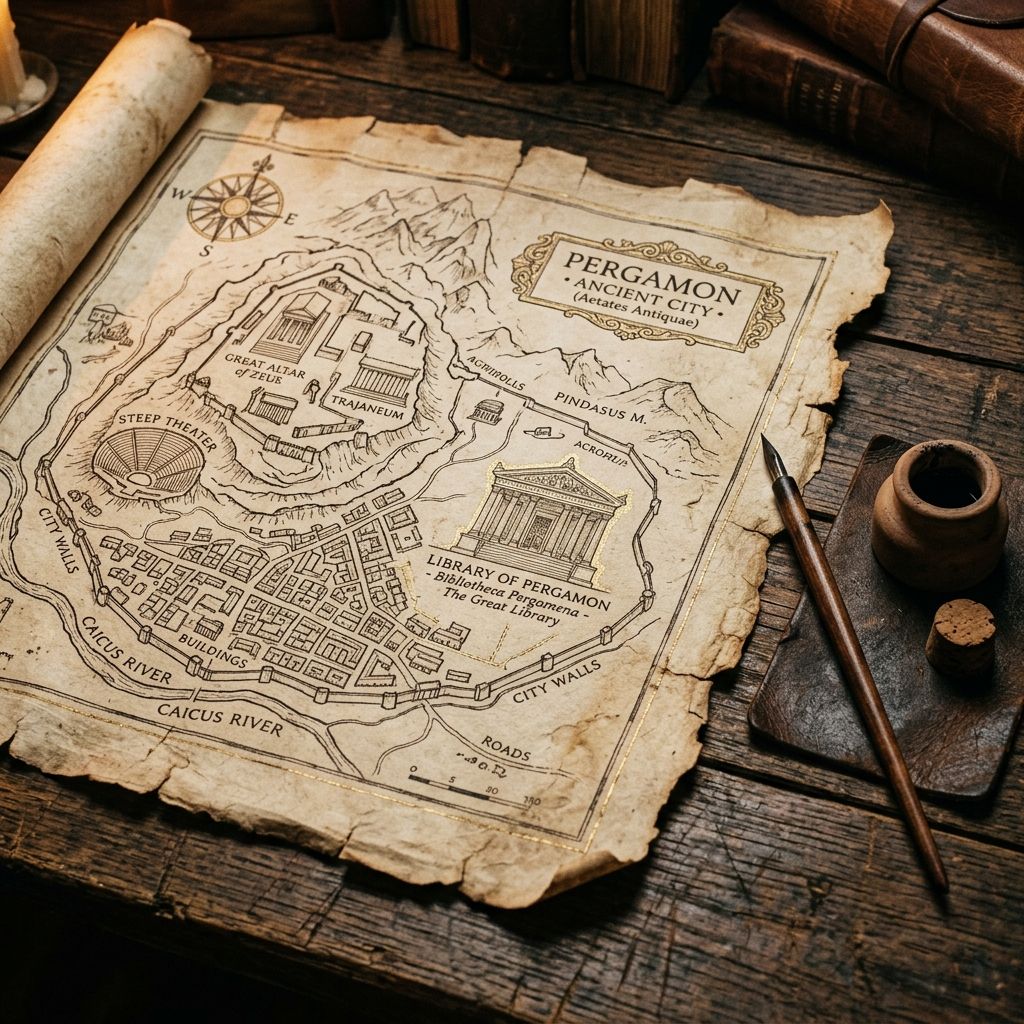
In the ancient world, a library was one of the most important displays of power, and one of the largest of its time was the Library of Alexandria.
The Library of Pergamon, founded to rival it, quickly gained renown, and the Ptolemaic king ruling Egypt, home of the Library of Alexandria, banned papyrus exports. Pergamon then turned to parchment as an alternative writing surface. Because parchment is made by thinning animal hide through natural processes without tanning, it is durable and can be written on both sides; thanks to this durability, it has survived to the present day.
Why am I telling you this? Last week we lost İsmail Araç, one of the few master parchment makers in the world. He was one of the most experienced hands keeping this 2,000-year-old tradition alive, and had been doing so since 1953.
Because of this mastery, he was first declared a “Bearer of Intangible Cultural Heritage” by the Ministry of Culture and Tourism in 2017.
In 2022, he was awarded the UNESCO-supported title of “Living Human Treasure.”
Today only a handful of people in the world keep this tradition going. Although he used to say, “When I die, this art dies with me,” he trained two masters. Thanks to the women masters he passed his craft on to, Demet Sağlam Tokbay and Nesrin Ermiş Pavlis, this craft has been handed down to the next generations. May you rest in paradise, Master.
The legal basis of this title is the “Convention for the Safeguarding of the Intangible Cultural Heritage,” adopted by UNESCO in 2003. Türkiye became a party to this convention in 2006, and nearly 700 elements from about 140 countries are registered on the list. With 32 entries, Türkiye ranks second after China. We are followed by France, Japan and South Korea.
Some of our heritage:
Meddah storytelling, the Mevlevi Sema, Karagöz and Nowruz,
Kırkpınar Wrestling, Turkish Coffee,
Ebru, Tile Craftsmanship.
Japan was actually the first to set up this system. It is based on the 1950 Law for the Protection of Cultural Properties, passed after the war. Since 1964, the Japanese government has paid an annual stipend of 2 million yen (about $13,500) to those it names a “Living National Treasure.” There can be no more than 116 “Living National Treasures” nationwide at any one time. When one of them dies, a new person is chosen to take their place.
Inspired by Japan, South Korea adapted the system in its own way in the 1960s. In fact, it was South Korea that took the proposal to UNESCO. But what sets South Korea apart is how it gives heritage a physical home. Jeonju Hanok Village, for example, is one of the best examples of cultural heritage tourism you could name. The city’s old fabric is kept alive, and visitors get to experience that way of life. Seoul even has a Cultural Heritage Festival where heritage bearers and their successors meet the public.
In recent years, the Ministry of Culture has created a celebration of living heritage in more than 20 cities with the “Culture Road Festival.” In short, it more than matches the festival side of the Korean model. But we need bolder, more concrete steps when it comes to giving heritage a physical home and turning it into living tradition. Because heritage is a memory when it is remembered; a value when it is kept alive.
Sources
- DHA, “Parşömenin son büyük ustası İsmail Araç hayatını kaybetti”, 28 Mayıs 2026. Open source
- Yeni Birlik Gazetesi, “Parşömenin yaşayan efsanesi veda etti: Bergama’nın kadim zanaatı artık emin ellerde”, 28 Mayıs 2026. Open source
- Hürriyet Daily News, “Parchment lives on in its birthplace thanks to apprentices”, 21 Ağustos 2026. Open source
- Wikipedia, “Parchment”. Open source
- Wikipedia, “Library of Pergamum”. Open source
- UNESCO Intangible Cultural Heritage, “Türkiye – Elements on the Lists”. Open source
- Hürriyet Daily News, “Türkiye in second place on UNESCO Intangible Cultural Heritage list”, 12 Aralık 2025. Open source
- Wikipedia, “Living National Treasure (Japan)”. Open source
- Wikipedia, “National Intangible Cultural Heritage (South Korea)”. Open source
- NTV, “Türkiye Kültür Yolu Festivali rekorlarla kapandı”, 6 Aralık 2025. Open source