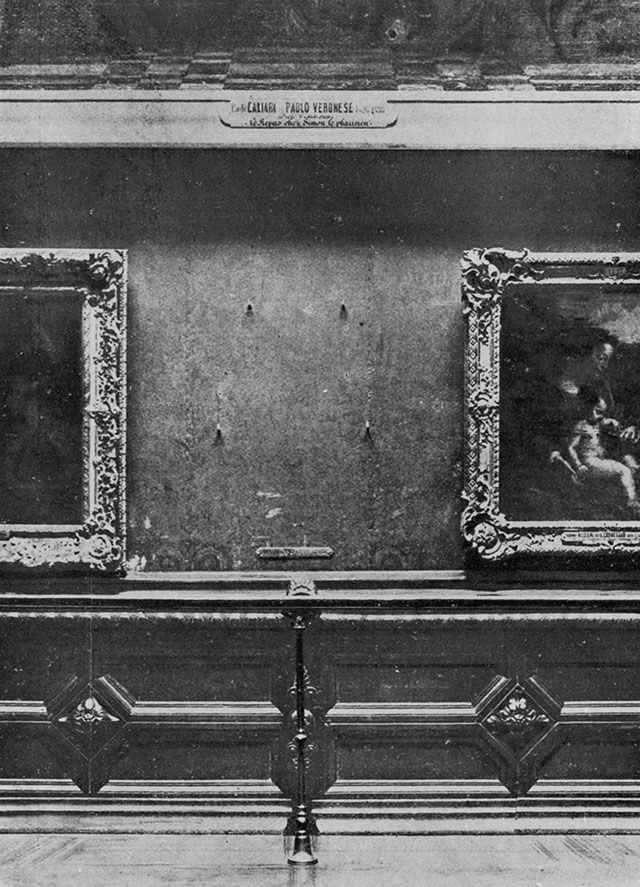
Why does everyone know the Mona Lisa even though it isn’t the greatest work in art history?
Because it was “Stolen”
One of thousands of paintings in the museum, the Mona Lisa is stolen on August 21, 1911, by former museum employee Peruggia, who wraps it in a blanket. For 28 hours, no one notices. Even Picasso’s name comes up during the investigation. After the theft makes headlines in the world press, people flock to the museum just to see the empty frame.
The Mona Lisa is found in Italy two years later. The painting is then taken on tour in Italy, and special exhibitions are held at the Louvre Museum. In short, the story is used as a marketing weapon.
The result: Today, most of the 10 million visitors who come to the museum come specifically to see the Mona Lisa.
The Tutankhamun treasures, on the other hand, are a textbook launch story.
The pharaoh who took the throne at the age of 9 was a forgotten figure until Howard Carter discovered him in 1922. The suspicious deaths, at different times, of researchers who took part in the excavation gave rise to the story of the “Curse of the Pharaoh.”
The gold mask and the treasures were sent on a world tour. Through Hollywood films, books and documentaries, they became a pop culture icon. Among the 5,000 objects in the Cairo Museum, everyone asks about the gold mask.
We have stories of our own, too:
When Hagia Sophia, a museum for 86 years, was converted into a mosque on July 10, 2020, the world press went up in flames. CNN, the BBC and the NYT ran headlines for days.
Hagia Sophia, which welcomed 3.7 visitors in 2019, broke a capacity record by hosting 10.2 million visitors in 2023, and in 2024 its gallery floor became paid entry under a new revenue model.
Göbekli Tepe, meanwhile, was a forgotten treasure until UNESCO made it explode. The temples built in 9600 BC were discovered in 1963, but nobody cared. Once it was added to the UNESCO World Heritage List in 2018, the motto “The Zero Point of History” caught on. As it appeared in documentaries and articles produced in the region, National Geographic above all, visitor numbers exploded.
Göbekli Tepe, which welcomed 36 thousand visitors in 2017, was visited by more than 700 thousand people according to official 2025 figures.
In my view, the Ministry of Tourism has been taking visible steps in this area lately:
The artifacts exhibited at the Colosseum in Rome in 2024 and 2025 are currently on display at Berlin’s Museum Island.
According to the statements made, London and Tokyo appear to be among the next stops.
So, do you think these efforts are enough to reach the masses?
I think a few things are still missing:
Storytelling must be continuous; we should build systematic campaigns alongside the exhibitions. (like the Karadeniz Steamship of 1926, which I have written about before)
We should support strategies for getting featured in Hollywood/Netflix productions.
It’s already happening, but we must keep it on the agenda through global influencer and media collaborations.
We should create a “Göbekli Tepe Experience” motto. With this move, which would also take in faith tourism in the region, we should market experiences to people.
Sources
- Smithsonian Magazine, “The Theft That Made the Mona Lisa a Masterpiece”. Open source
- History.com (Evan Andrews), “The Heist That Made the Mona Lisa Famous”, 19 Ağustos 2016. Open source
- Wikipedia, “Mona Lisa”. Open source
- Wikipedia, “Tutankhamun”. Open source
- Duvar English, “Istanbul’s Hagia Sophia 2019’s most popular tourist destination in Turkey”, 5 Şubat 2020. Open source
- Demirören Haber Ajansı, “Yabancı turistlerin Ayasofya’ya girişi ücreti 25 euro olacak”, 12 Ocak 2024. Open source
- Wikipedia, “Göbekli Tepe”. Open source
- Habertürk, “Türkiye’nin kültürel diplomasisinde başrolü üstlendi”, 23 Mart 2026. Open source
- Parco archeologico del Colosseo, “Göbeklitepe. L’enigma di un luogo sacro”. Open source
- Hürriyet, “Göbeklitepe Berlin’e gidiyor”, 29 Ocak 2026. Open source