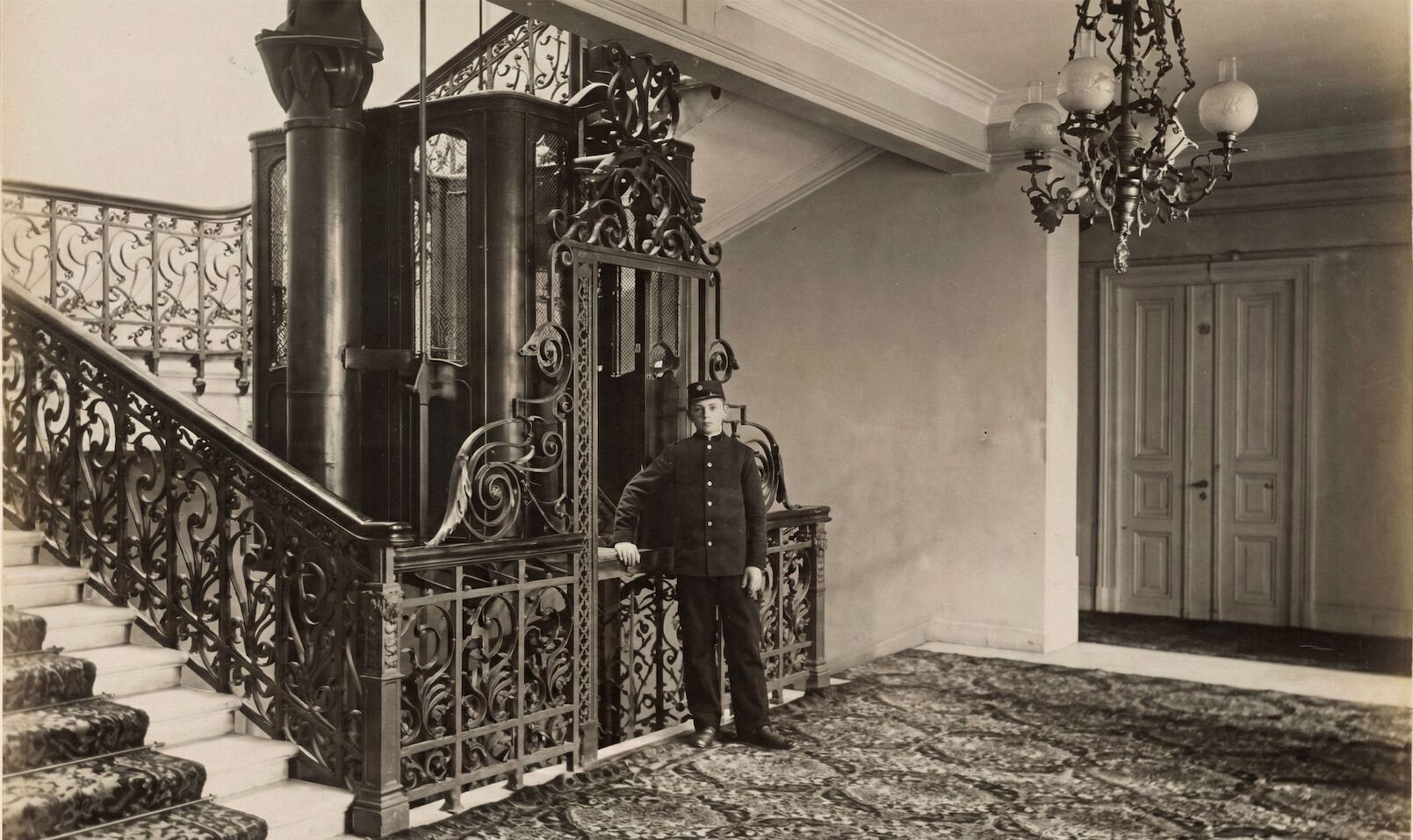
“Pera Palace”
The Sultan of the time was Abdülhamid II.
With his permission, for the first time, a building outside the palaces was granted the following privileges:
Electricity
Hot Water
Electric Elevator
Today this may not mean much to us, but in the Türkiye of the 1890s, these amenities represented luxury and technology.
Why These Privileges?
Imagine the late 19th century. No air travel, tours and routes by ship are quite limited, and only one thing remains: the LUXURY TRAIN
There was a clientele that would not compromise on comfort while making cultural discoveries. This elite group would arrive in Istanbul after cities such as Paris, Strasbourg, Munich, Vienna, Budapest, Bucharest and Varna, in that order.
Because Istanbul offered poorer accommodation than these cities, train passengers often complained about their lodging experience. The company that owned the Orient Express turned the crisis into an opportunity and decided to invest in a hotel in Istanbul.
As a result of this decision, Pera Palace, bearing the signature of the Levantine architect Alexandre Vallaury, began to rise in Tepebaşı in 1892. It opened in 1895 with an official ball.
This building was not simply a hotel construction project; it physically connected Istanbul to the European tourism network.
Diplomats and bureaucrats boarding the train in Paris or Vienna could now find the standard of comfort and security they were used to in Istanbul as well. Despite the turmoil and risk of the late Ottoman period, Abdülhamid II supported this investment with the privileges he granted.
How Did the Orient Express Come About?
Georges Nagelmackers, the son of a Belgian banker, went to America in the 1860s.
There he saw the “Pullman” sleeping cars.
He realized that long distances could be traveled in comfort. But Europe was fragmented. At every border you had to get off and change trains.
With the dream of building a borderless European railway network, they managed to travel from Paris to Istanbul on a single train by simplifying passport and customs procedures. The company, founded in 1876, ran the first Orient Express service in 1883.
Pera Palace, as the final stop of this vision, was the last link in the chain.
This route operated until 1977.
“Room 101 Atatürk Museum”
Pera Palace’s brand value reached its peak not only through its architecture or the luxury it offered, but through its most special guest: Mustafa Kemal Atatürk.
Atatürk, who used the hotel frequently, especially on his returns from the Gallipoli Front and afterward, did not treat it merely as a place to stay; he turned it into a kind of headquarters where critical decisions were made in occupied Istanbul and where the country’s fate took shape.
Room 101, where Atatürk stayed, was converted into a museum and placed under protection in 1981, the 100th anniversary of his birth.
Today this room carries Pera Palace beyond being a commercial business and positions it as one of the iconic buildings of the history of the Republic.
Sources
- Wikipedia, “Pera Palace Hotel”. Open source
- Pera Palace Hotel, “The Story of Historical Pera Palace Hotel”. Open source
- Pera Palace Hotel, “14 Interesting Facts About Pera Palace Hotel You Probably Didn’t Know”. Open source
- Pera Palace Hotel, “The Story of Room 101 (Atatürk’s Room) of Pera Palace Hotel”. Open source
- Kültür Envanteri, “Pera Palas”. Open source
- Wikipedia, “Orient Express”. Open source
- Encyclopaedia Britannica, “Orient Express”. Open source
- Wikipedia, “Compagnie Internationale des Wagons-Lits”. Open source
- European Route of Industrial Heritage (ERIH), “Georges Nagelmackers (1845–1905)”. Open source
- Sözcü, “Atatürk’ün bağımsızlık yolu 2: İstanbul’daki altı ay”. Open source