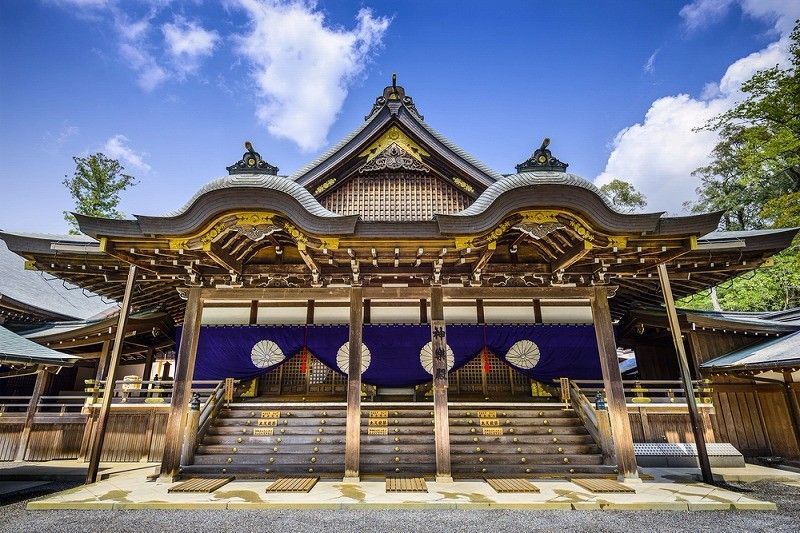
Does Ise Grand Shrine mean anything to you?
One of Japan’s oldest shrines:
This structure has existed for about 1,300 years.
But the structure itself isn’t 1,300 years old.
Today, about 8 million people visit the shrine each year.
And yet around 60% of Japanese society defines itself as atheist.
Every 20 years, the shrine is rebuilt, alternating between two parallel sites.
The new structure is built on the empty plot right next to the old one.
Then the sacred symbols
(the sacred mirror, designated timbers and ritual objects)
are transferred to the new structure in a ritual held at night
and the old structure is dismantled.
In other words:
The same sacred location is preserved.
Knowledge and craftsmanship are passed on.
The structure, meanwhile, is renewed with fresh timber in every generation.
The next Naikū renewal will take place in 2033, on the northern site.
The critical difference behind this continuity is this:
Every detail of the structure has been recorded for centuries with clear drawings, measurements and construction rules.
The heritage isn’t just told; it’s turned into reproducible knowledge.
And inevitably, this question arises:
When we say we are preserving a building,
if one day we had to build the same thing again,
do we really know how it would be done?
Are we only keeping the stones that are still standing,
or the knowledge that could put those stones back in place?
Sources
- Wikipedia, “Ise Grand Shrine”. Open source
- Wikipedia, “Sengū”. Open source
- National Geographic, “This Japanese shrine is torn down every 20 years”. Open source
- Japonya Arazi, Altyapı, Ulaştırma ve Turizm Bakanlığı (MLIT) Çok Dilli Açıklama Veritabanı, “Ise Jingu (long version)”. Open source
- Ise-Shima Turizm Bürosu, “Shikinen Sengu, the largest ritual at Ise Jingu, conducted every 20 years”. Open source
- Ise Belediyesi (kaynak: Jingū Shichō), “Jingū sanpaisha sū (yıllık ziyaretçi istatistikleri)”, 2025. Open source
- The Japan Times, “Ise Jingu parlays Shinto ritual into record crowds”, 20 Aralık 2013. Open source
- Wikipedia, “Religion in Japan”. Open source